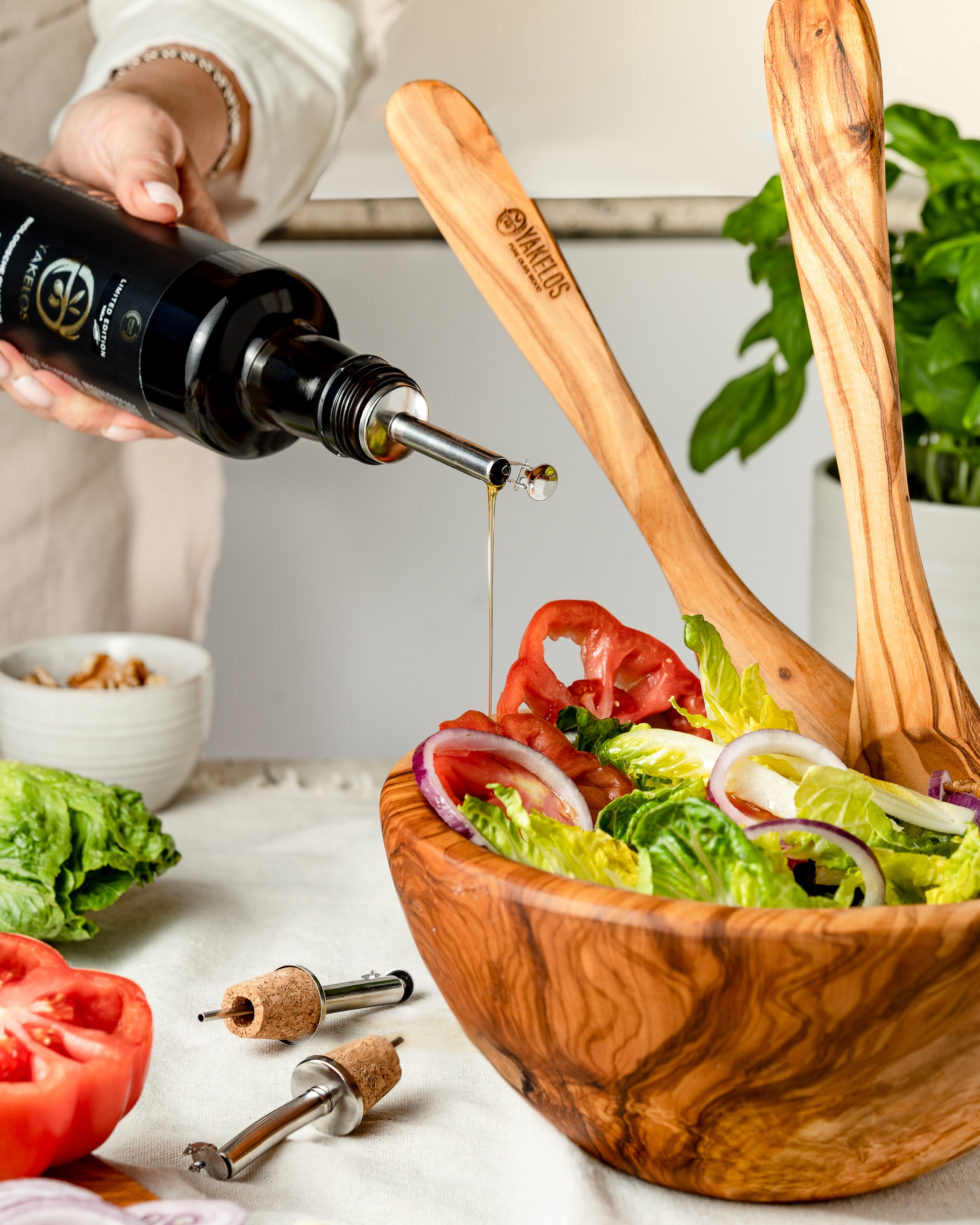


Picture a table in a small village kitchen: tomatoes, bread, olives, and a bottle of extra virgin olive oil within reach of every plate. That is the everyday picture behind the Mediterranean diet, a traditional way of eating built on whole foods and good fats, not calorie counting. Below: what it includes, why it works, and how to start.
- 23% lower risk of early death linked to high adherence to the diet
- 5 a day minimum portions of vegetables or fruit in the pattern
- 0.2 to 0.4% acidity of Yakelos olive oil, well under the 0.8% extra virgin limit
What is the Mediterranean diet?
The Mediterranean diet is the traditional eating pattern of countries around the Mediterranean Sea, such as Italy, Greece, Spain and Tunisia. It is built mainly on plant foods, whole grains, fish and good fats, with olive oil as the main fat source.
Unlike a modern diet for quick weight loss, this is a long term eating pattern and lifestyle. It focuses on whole, minimally processed food rather than counting calories.
You can read more about how it developed in the origins of the Mediterranean diet.
What do you eat on the Mediterranean diet?
What lands on your plate, day to day? Think in frequency: a daily base, foods for several times a week, and foods to limit.
| Frequency | Food group | Examples |
|---|---|---|
| Daily | Extra virgin olive oil, vegetables, fruit, whole grains, pulses, nuts | Olive oil, tomatoes, leafy greens, wholemeal bread, lentils, almonds |
| Several times a week | Fish, shellfish, poultry | Grilled sardines, mussels, chicken |
| In moderation | Dairy and eggs | Greek yoghurt, feta, a few eggs a week |
| Limit | Red meat, ultra processed food, refined sugar, white bread | Sausages, crisps, soft drinks, sweets |
Extra virgin olive oil sits at the top of that daily base, used instead of butter. See how it compares in healthy and unhealthy fats.
Why olive oil is the heart of the pattern
Olive oil is not one ingredient among many here, it is the main fat source. That makes quality worth caring about, since you likely use it daily and raw.
Genuine extra virgin olive oil has an acidity under 0.8 percent, a measure of free fatty acids from bruised or over-ripe olives. It is cold processed below 27 degrees, protecting flavour and antioxidants called polyphenols.
A single, named origin also says something about how carefully the oil was handled.
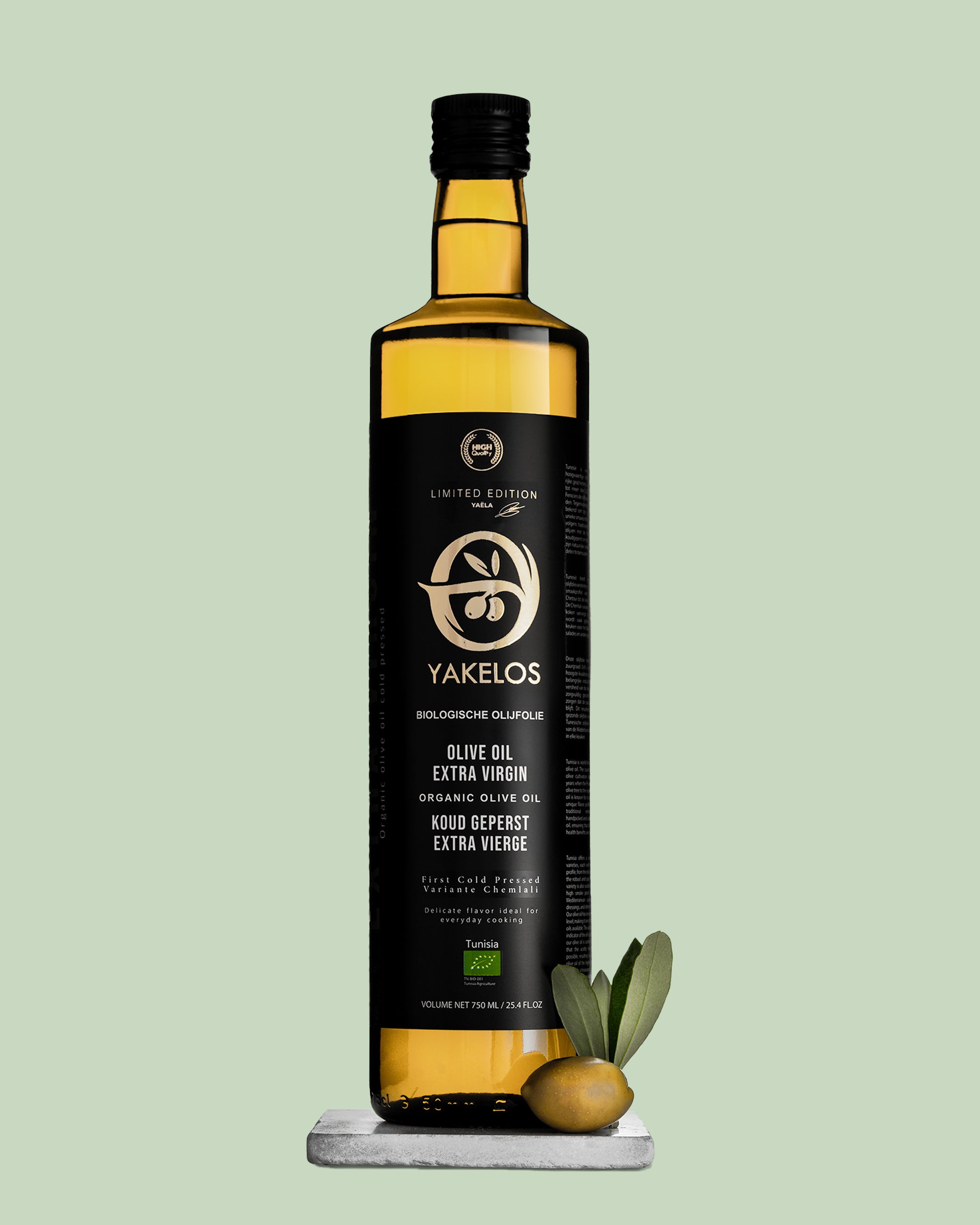
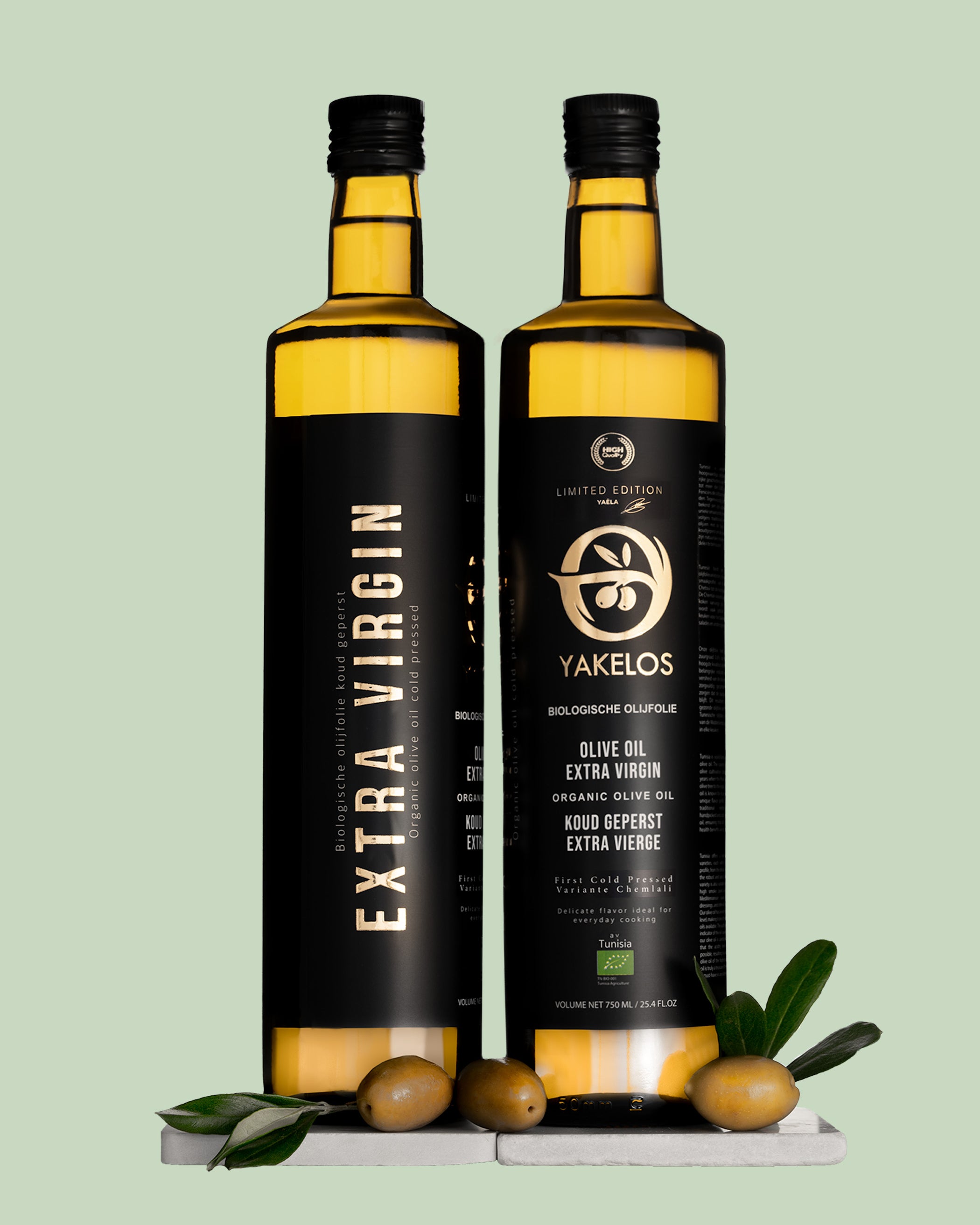
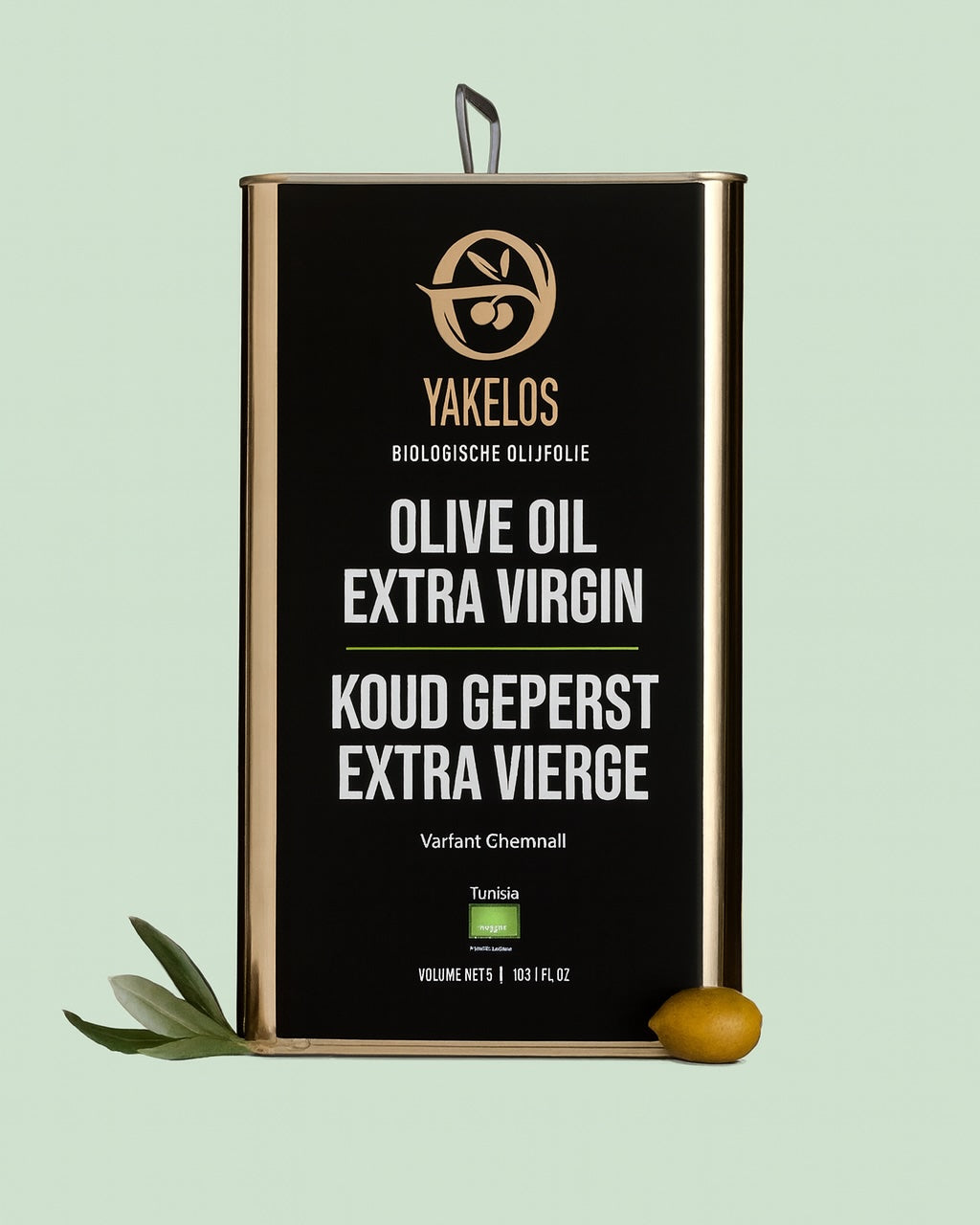
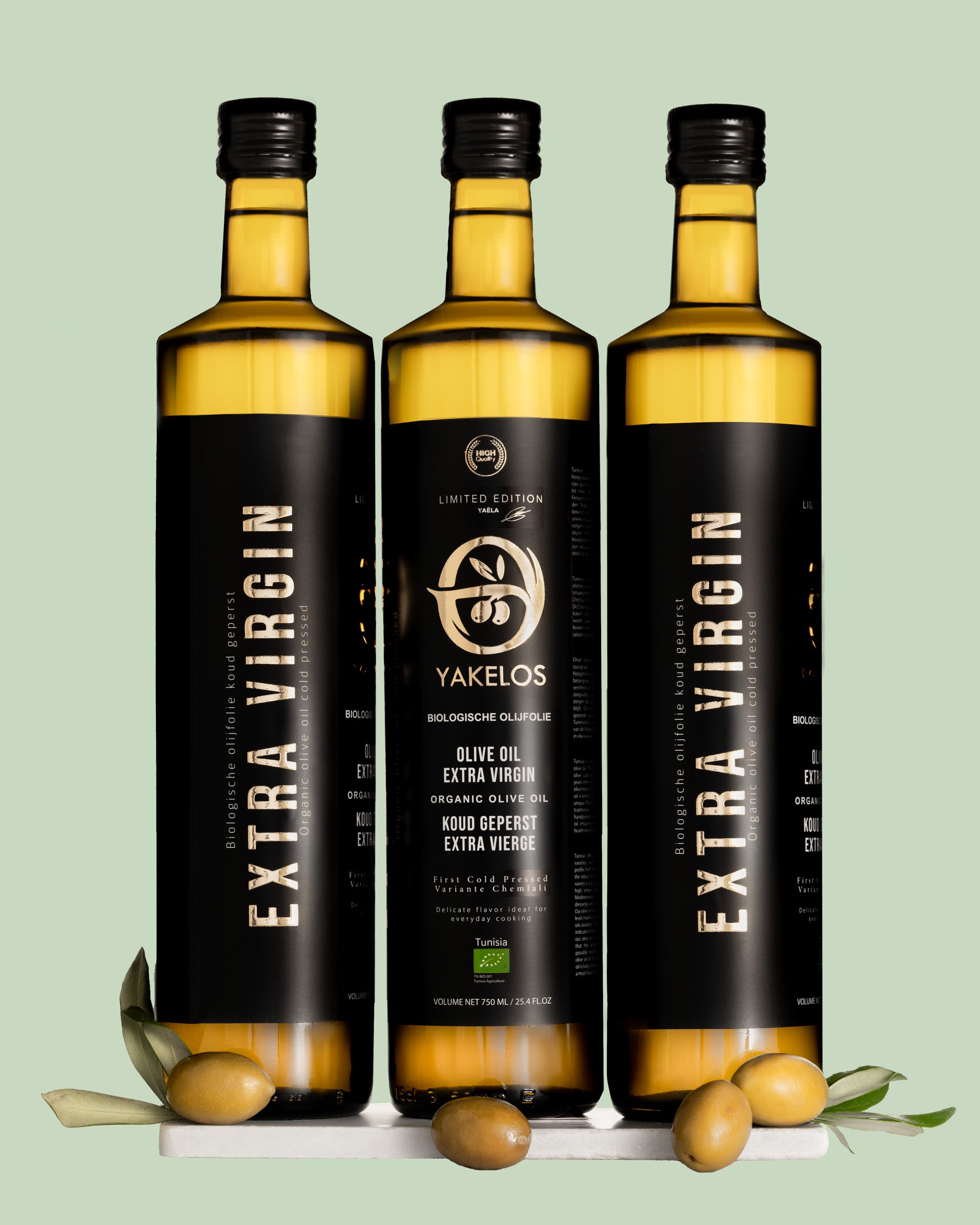
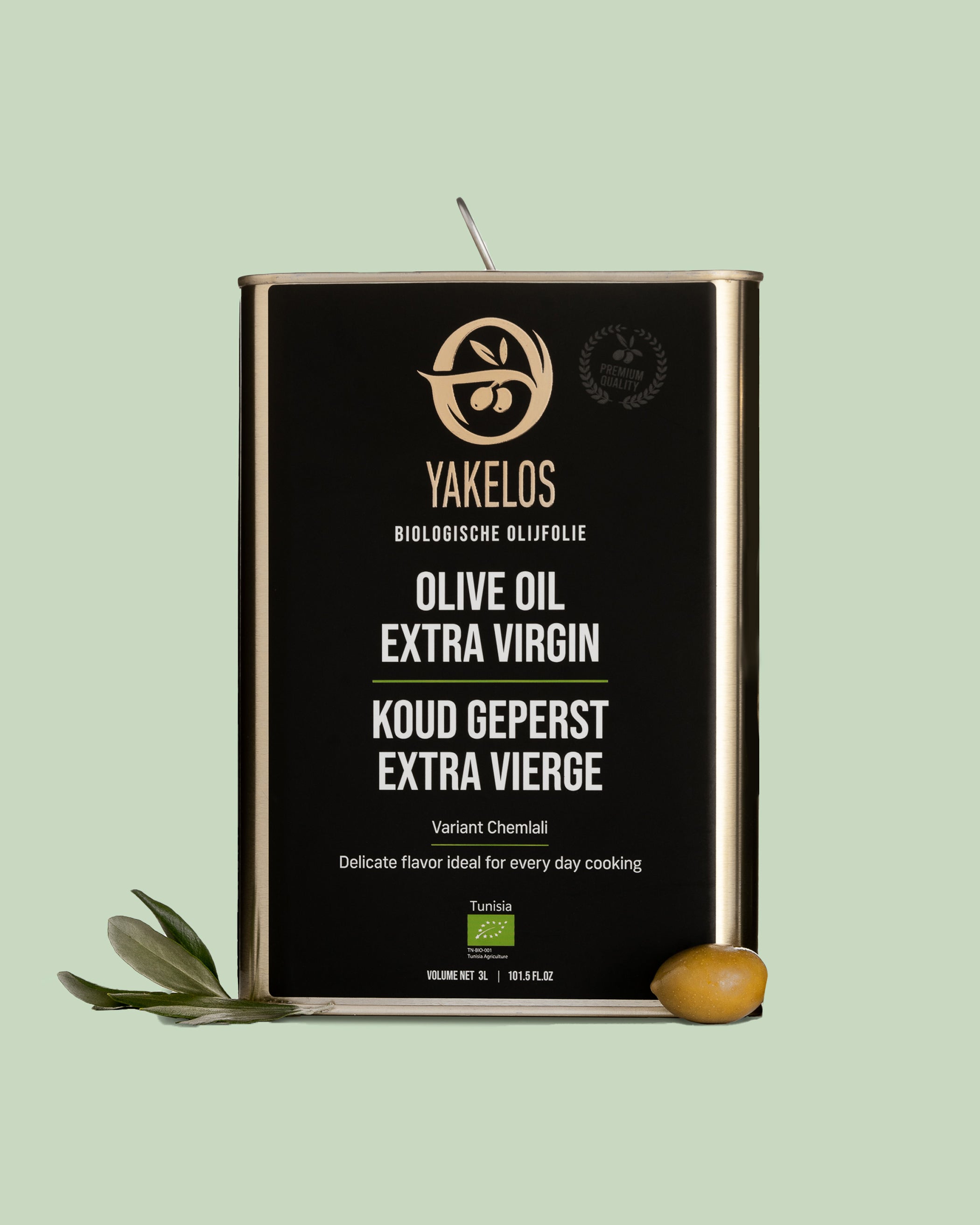
Yakelos is one example: a single Chemlali variety from central Tunisia, with an acidity of roughly 0.2 to 0.4 percent. See the specifications for the organic extra virgin olive oil below.
Yakelos organic extra virgin olive oil specifications
- Olive variety: Chemlali, a single variety
- Origin: central Tunisia
- Acidity: roughly 0.2 to 0.4%
- Processing: cold, below 27 degrees, within hours of harvest
- Certification: SKAL and EU Organic
- Shelf life: up to 2 years from bottling
Why the Mediterranean diet is considered healthy
Picture a study following thousands of adults for years. Those who closely followed this pattern showed a lower risk of cardiovascular disease, type 2 diabetes and some cancers.
High adherence has also been linked to a lower risk of early death. The likely drivers are unsaturated fats, fibre from whole foods, and less processed food overall.
The Gezond Leven dietary guidance links the pattern to lower cardiovascular risk and recommends at least five portions of vegetables or fruit a day.
The benefit sits in the whole pattern over time, not in any single food you add to your plate.
If you want to weigh the evidence on olive oil itself, is olive oil healthy looks at that question in more detail.
A Mediterranean day of meals
Imagine an ordinary Tuesday, just a normal day of eating this way.
- Breakfast: Greek yoghurt with walnuts, honey and berries
- Lunch: wholemeal bread with hummus, tomato, cucumber and olives
- Dinner: grilled fish with Mediterranean vegetables, brown rice or quinoa, and a generous drizzle of extra virgin olive oil
- Snack: fruit or a small handful of unsalted almonds
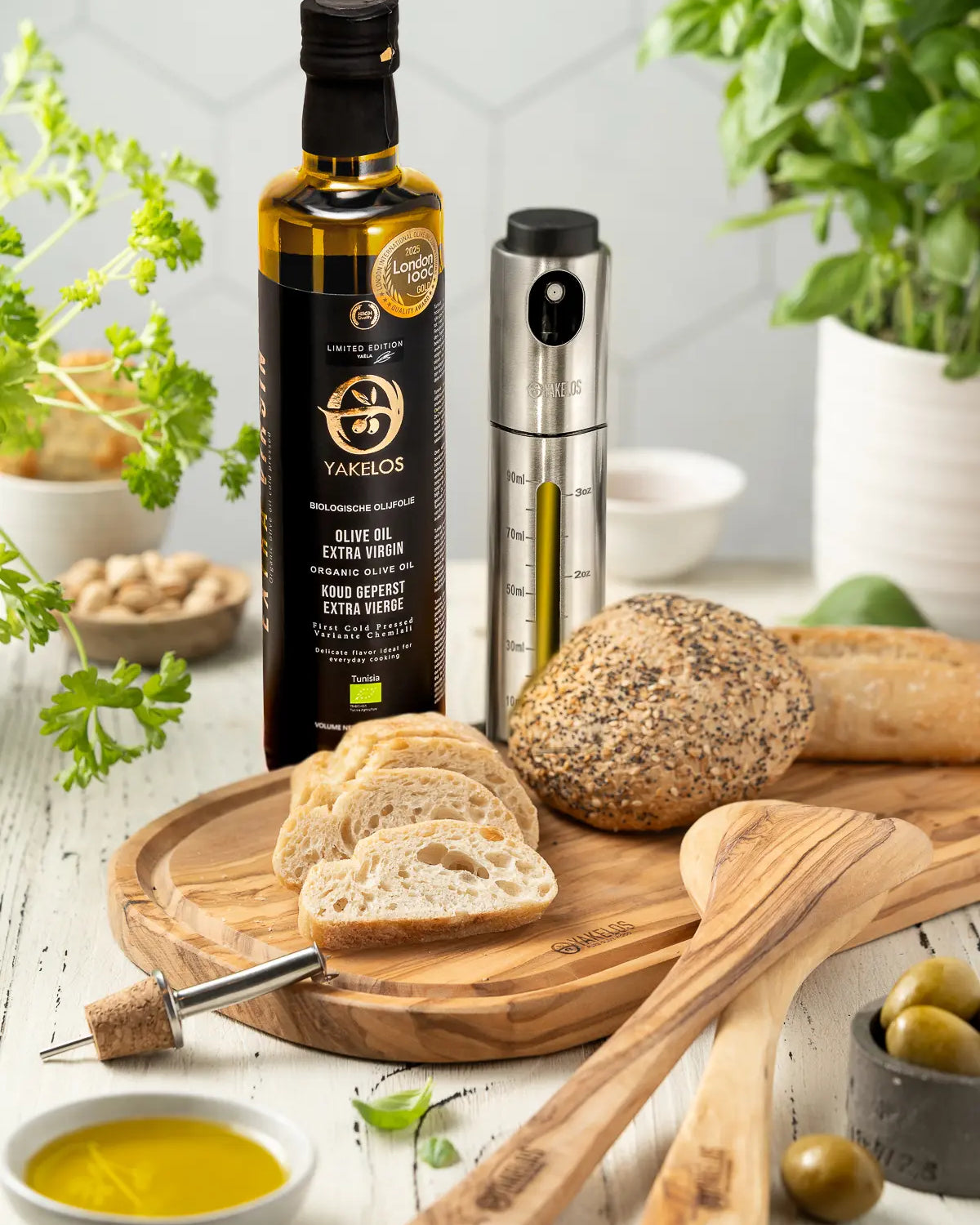
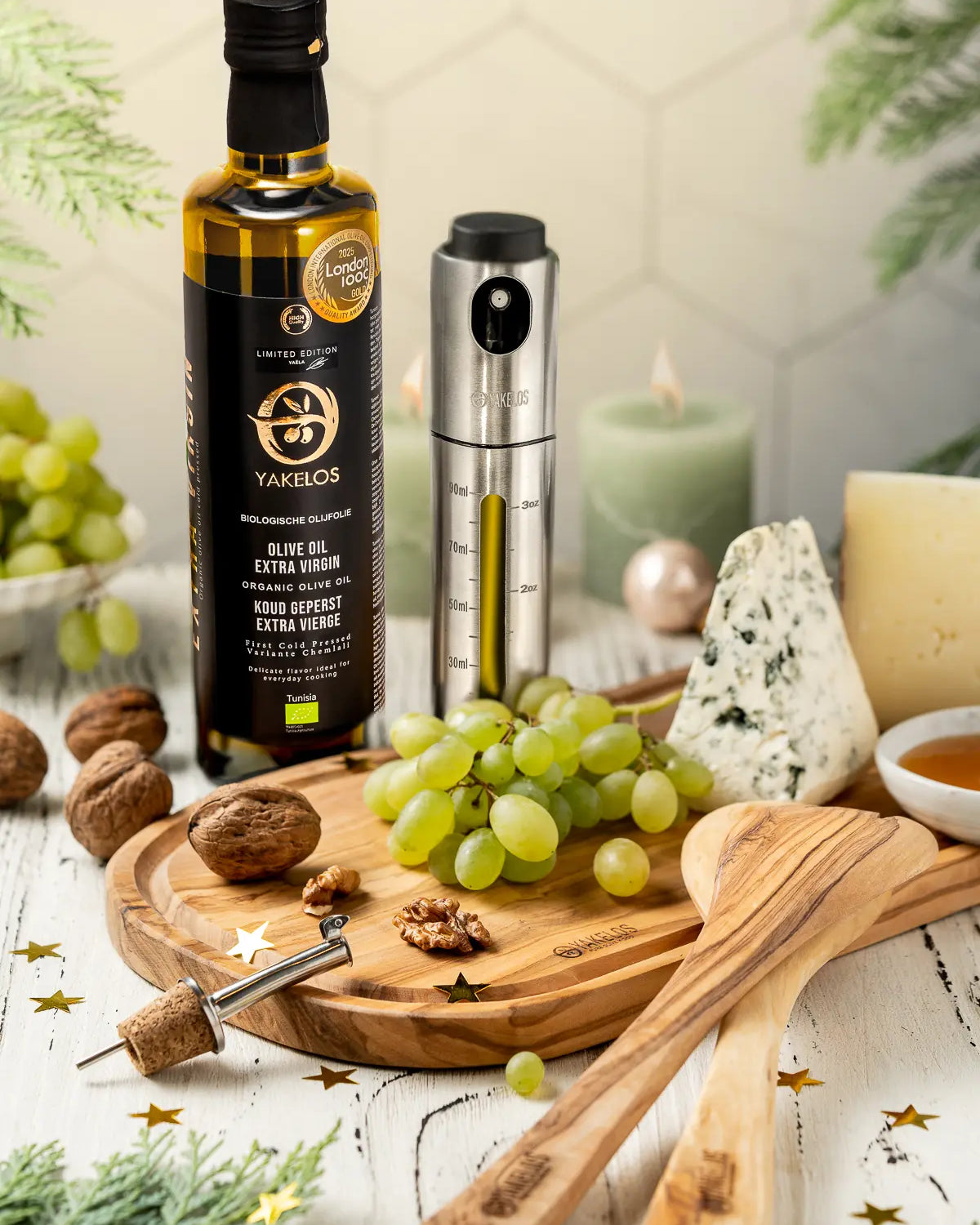
Notice how olive oil appears again and again, finishing the hummus and drizzled over the fish before serving. Used raw like this, you taste it rather than cook it away.
Want an easy way to start?
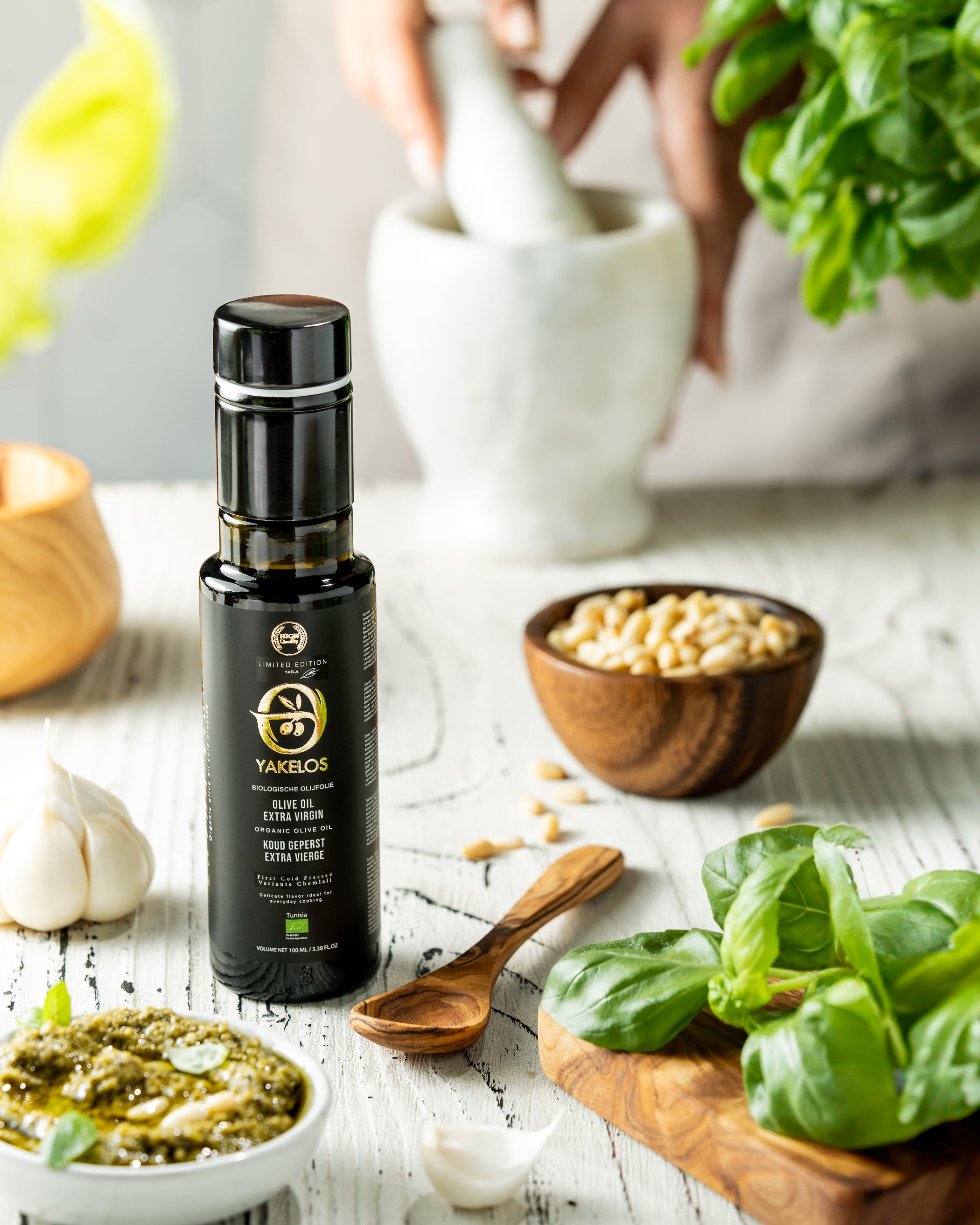
A good way to start is with a small bottle you can try before committing to a larger one. The olive oil trial box lets you taste Yakelos Organic Extra Virgin Olive Oil first.
How to start and what about wine
Where do you begin, without changing everything in your kitchen at once?
Start small: swap a biscuit for nuts, choose wholegrain over white, and use olive oil instead of butter. Eating together and moving regularly matter just as much.
If you are unsure which bottle to reach for, types of olive oil explains the grades and when to use each one.
The pattern is often pictured with a glass of red wine, but that needs correcting. There is no safe level of alcohol, so wine is optional at most.
Tip from Yakelos: use extra virgin olive oil raw as a finishing drizzle, and keep cooking below 170 to 180 degrees. This way you keep the flavour and polyphenols, and the oil stays within its comfortable range.
The Mediterranean diet, summed up
The Mediterranean diet is less a strict diet and more a traditional way of eating: vegetables, whole grains, pulses, fish and extra virgin olive oil as the daily base. The evidence points to real associations with lower cardiovascular risk, though no single food does the work alone.
Quality matters where you eat something daily, which is why the acidity of your olive oil is worth checking. Start with small swaps rather than an overhaul.
Frequently asked questions about the Mediterranean diet
What foods can you eat on the Mediterranean diet?
The daily base is vegetables, fruit, whole grains, pulses, nuts and extra virgin olive oil. Fish and poultry feature several times a week, dairy in moderation.
What is a Mediterranean breakfast?
A typical example is Greek yoghurt with walnuts, honey and berries, or wholemeal toast with olive oil and tomato.
What should you not eat on the Mediterranean diet?
Red meat, ultra processed food, refined sugar and white bread are kept to a minimum, not forbidden outright.
Is the Mediterranean diet good for weight loss?
It may support gradual weight loss through filling, fibre rich foods, but it works best as a long term pattern rather than a quick fix.
Can you cook with extra virgin olive oil?
Yes, it suits raw use and cooking up to roughly 170 to 180 degrees. Staying below that protects the flavour.
Does the Mediterranean diet include wine?
It is often pictured with a glass of red wine, but authorities say there is no safe level of alcohol, so it is optional at most.
For more everyday questions about choosing and using olive oil, have a look at the olive oil FAQs.