


Think of Mediterranean salads and the first two that will surely come to mind are the Greek salad and the Caprese Salad from Italy. Both are modern classics, as they haven't been around for very long.
But Spain also has an iconic salad: the Ensalada mixta.
There are few dishes as iconic in Spain as the ensalada mixta. It is the salad you will encounter everywhere: on the daily menu, on family tables in August, and in beach bars where the sun melts the ice in your soda. At first glance, it seems simple: lettuce, tomato, onion, tuna, olives, egg. But behind that simplicity lies a long history.
The origins: from modern urban salad to national dish
The origins of the ensalada mixta date back to the early 20th century, when the growing urban middle class in Spain embraced lighter, vegetable-rich dishes, influenced by Mediterranean eating habits already prevailing elsewhere. Earlier Spanish salads were often rustic in nature. Think of tomatoes with olive oil or orange slices with fennel in Andalusia.
The Ensalada Mixta, or 'mixed salad', emerged as a modern, flexible variant: a base of fresh vegetables, finished with whatever was produced in abundance in the region. By the 1960s, it had become a national dish, partly due to the rise of tourism and the standardization of restaurant menus.
Regional variations: from Andalusia to the Basque Country
Despite its name, the ensalada mixta is anything but uniform. In Andalusia, it often contains canned corn and asparagus, a nod to the region's fondness for preserved vegetables. In Catalonia, you can sometimes find escalivada, vegetables that are roasted whole. Think of bell peppers and eggplants that provide a smoky depth. Navarre relies on its excellent pimientos del piquillo, chili peppers with very little heat, while in Valencia people sometimes add capers or even early fava beans. Along the north coast, particularly in Cantabria and the Basque Country, tuna is once again the star of the show, reflecting the region's fishing heritage.
The essence: pure ingredients and a simple dressing
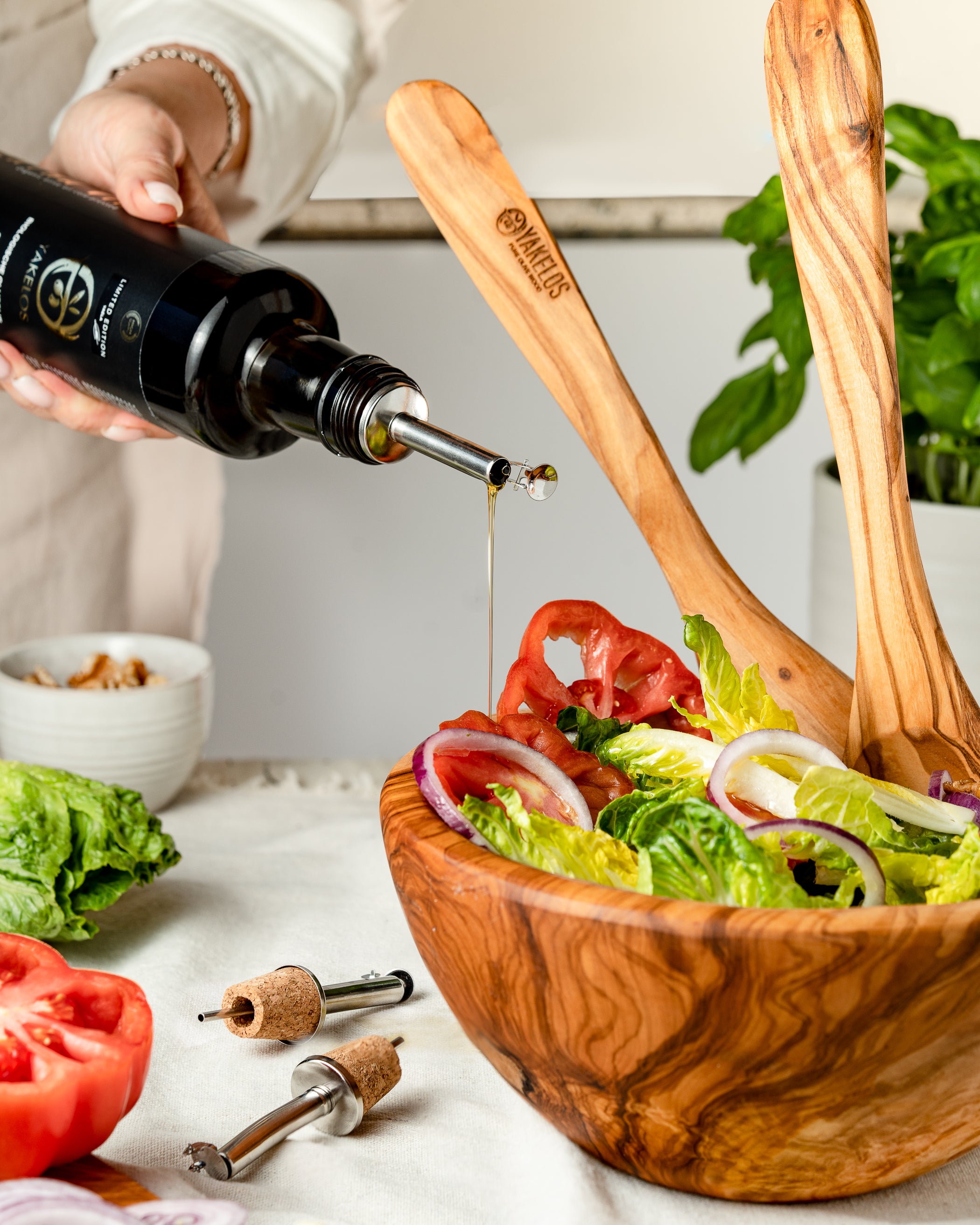
What all these variations have in common is the dressing: a generous splash of extra virgin olive oil, some vinegar, and salt. No complicated sauces. Just the essential ingredients from the Spanish pantry. Essence. That is the word that best describes the Ensalada Mixta.
A dish that adapts
The ensalada mixta endures because it adapts. It is a salad that reflects the landscape, the season, and the mood of the chef, making it one of the most accessible and beloved dishes in Spain.